
Energy, what are we talking about?
Energy is a key sector for our societies. As a factor in the development of civilisation, energy takes various forms (nuclear, chemical, electrical, etc.). It comes from different sources (coal, oil, uranium, wind, etc.). Indeed, it is used on a daily basis to meet our needs (heating, transport, food, etc.). However, the production of this energy also has negative effects that must be kept in mind in order to better mitigate them.
Learn more about energy on Jean-Marc Jancovici’s website.
The challenges surrounding energy efficiency at the University of Lorraine
Environmental impact
The first obvious issue, as mentioned above, is the environmental impact associated with energy use. For the 2023/2024 academic year, if we focus solely on GHG emissions, the university’s energy consumption resulted in the release of 8,600 tonnes of CO2 equivalent, or 200 marathons per user of the Harry Potter films in streaming (if that doesn’t make you know all the lines…).
Financial impact
The second is financial. Due to the size of our establishment, our energy costs are high. The university has seen a drop in consumption thanks to the work of various university departments (building renovations, awareness campaigns, purchasing more energy-efficient equipment) and everyone’s efforts to adopt good habits!
Nevertheless, we note that the overall cost continues to rise. It reached €16.3 million for the 2023/2024 academic year, an increase of 58% in four years. This is due to high energy price inflation. Without the efforts made, we would have spent more. A 58% increase in four years. This is due to high energy price inflation. Without the efforts made, we would have spent more. Without the efforts made, expenditure would have been even higher. These savings represent resources that the university can devote to research or to maintaining and improving the working and study conditions of the university community.
Regulatory
Finally, the last challenge is regulatory. As a public institution, our university is subject to the tertiary decree, which requires us to reduce the final energy consumption of our buildings larger than 1,000 m² by:
- 40 % in 2030
- 50 % in 2040
- 60 % in 2050.
As of 31 August 2024, we have already managed to reduce our energy consumption by 31.6% compared to 2012 (the reference year). Although this is a good result, the property management department (DPI), which is responsible for monitoring our consumption, points that without everyone’s commitment to acting more soberly, without
Université de Lorraine is committed to energy efficiency
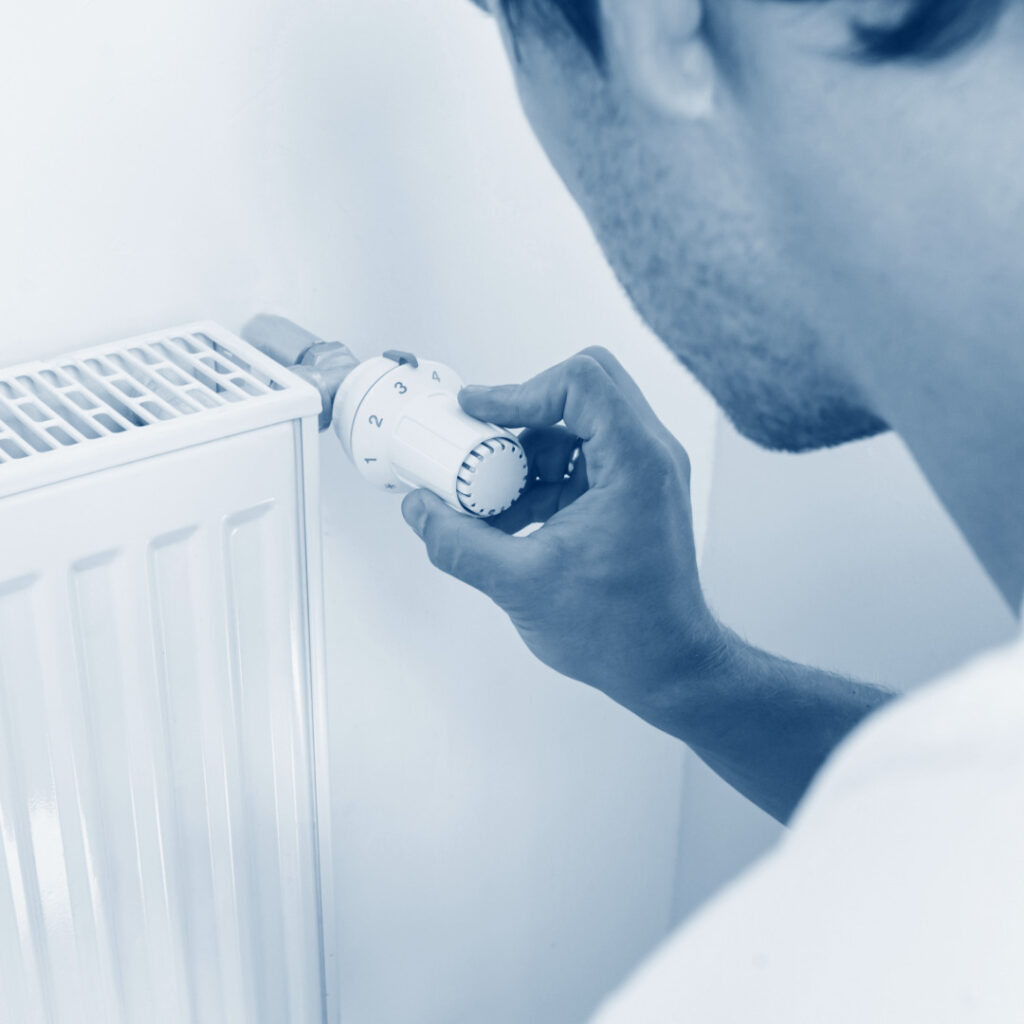
Heating and air conditioning control
In accordance with the circular issued by the Ministry of Higher Education, Research and Innovation (MESRI) on 24 September 2022, heating is limited to 19°C and air conditioning to 26°C during periods of occupancy.
During periods of non-occupancy, the heating setpoint temperature must, as far as possible:
- Be lowered by at least 2°C in the event of daily overnight unoccupancy.
- Be set at a maximum of 16°C when the period of unoccupancy is equal to or greater than 24 hours and less than 96 hours.
- Be set at a maximum of 8°C when the period of unoccupancy is equal to or greater than 96 hours.

Permanent awareness-raising among users
Therefore, energy efficiency also requires ongoing awareness among users, which is essential to understanding the challenges of energy efficiency:
- Poster campaigns,
- Quizzes,
- Workshops.
A purchasing policy that takes the environment into account
Indeed, Université de Lorraine’s purchasing policy takes into account the integration of environmental technical specifications, particularly with regard to energy consumption.
Improvement of lighting systems
Lighting systems are gradually being improved. This involves replacing inefficient light bulbs with low-energy bulbs (LEDs).
Building renovation
Renovation of buildings and installation of equipment contributing to improved thermal comfort and reduced energy consumption:
- dimmers
- radiators
- dual flow ventilation…
Economies through changes in collective behaviour
- Eliminate where possible: hot water supply, air conditioning, etc.
- Where possible, share certain offices/labs so that the heating can be turned off in the vacated spaces.
- During winter, when there are fewer students (evenings, Saturdays, internship periods), group teaching activities in a single building on campus so that certain floors or even certain buildings can be closed. Avoid massive air exchanges during periods of extreme cold or heat (e.g. reschedule activities requiring a hood/fume cupboard and make users aware of the energy intensity of this equipment).
- Rationalise the use of equipment (measuring devices, computer rooms, etc.) and switch off those that are not in use. Raise awareness of the energy consumption of certain appliances by affixing energy rating labels to them.
- Remove energy-intensive lighting that is not essential for the safety of property and people. Also, check the settings for automatic light switches (which are generally too sensitive).
- In December, January and February, schedule energy-intensive experiments and calculations between 11 a.m. and 6 p.m. This avoids peak hours in the morning and evening, reducing not only the electricity bill but also the demand for electricity production from gas-fired power stations, which are high CO2 emitters.
It is therefore the duty of every member of the university community to adapt their behaviour so that together we can successfully meet this challenge!